Project
Insight
Making Four Seasons
Making Four Seasons
Built to be experienced.
Built to be experienced.



Four Seasons started without much of a plan for what the final thing would be. Reaktor was taking part in ADNIGHT for the first time, and after a couple of years where most of our lives had become considerably more digital, we wanted to make something people could experience together in the same room.
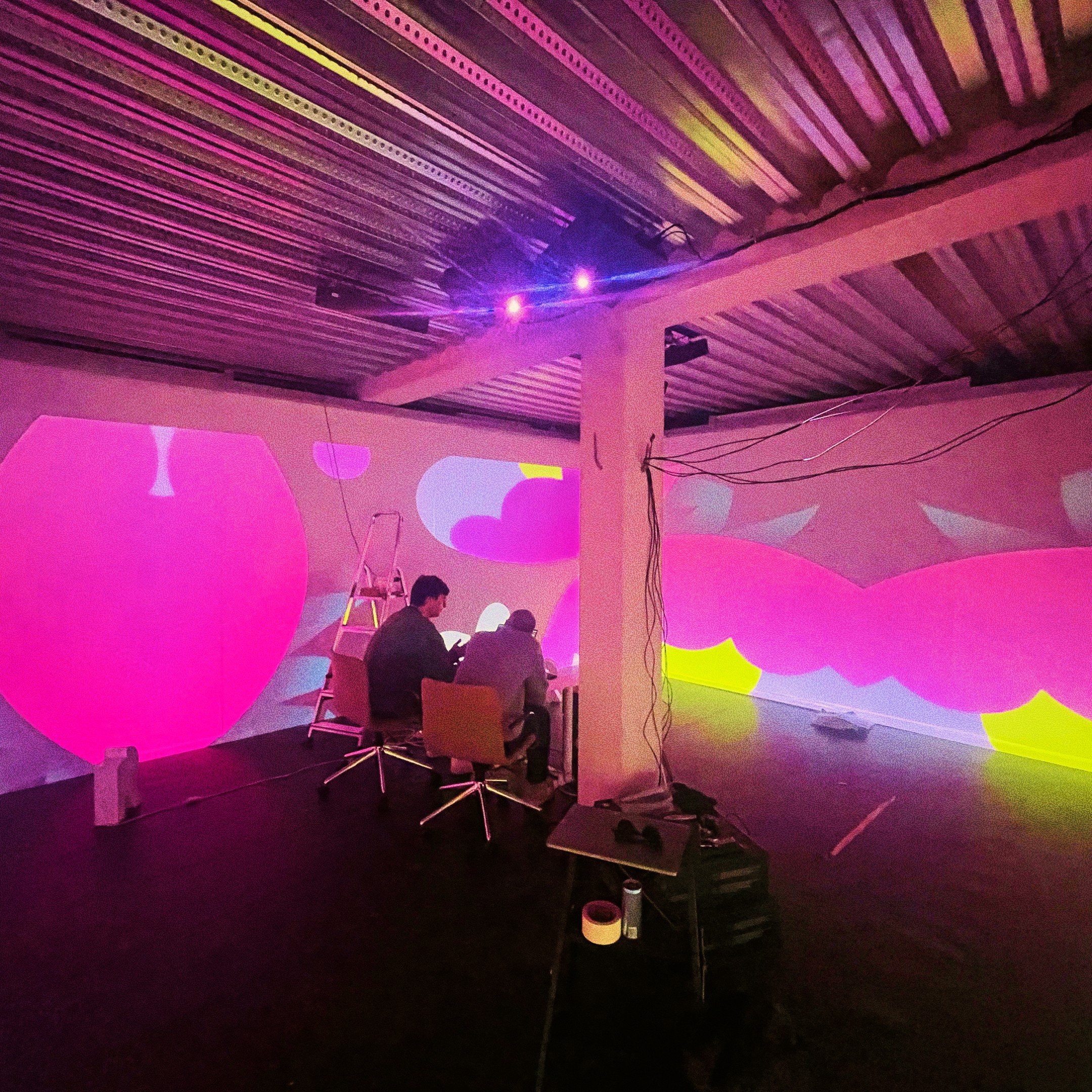
The idea gradually became Four Seasons: an immersive installation moving through spring, summer, autumn and winter, with twelve individual visual worlds representing the months of the year. Projection, sound and motion tracking turned the space into something people could affect simply by moving through it.
What I remember most clearly is how little we knew about making something like this when we started. None of us had built that exact kind of experience before, but between us there was enough overlap to make it feel possible. I had experience working at a large scale through murals and painting, others were handy with construction, some had backgrounds in architecture, and alongside that we had strong digital, development and games experience. That mix gave me confidence that we could figure the rest out.
Four Seasons started without much of a plan for what the final thing would be. Reaktor was taking part in ADNIGHT for the first time, and after a couple of years where most of our lives had become considerably more digital, we wanted to make something people could experience together in the same room.
The idea gradually became Four Seasons: an immersive installation moving through spring, summer, autumn and winter, with twelve individual visual worlds representing the months of the year. Projection, sound and motion tracking turned the space into something people could affect simply by moving through it.
What I remember most clearly is how little we knew about making something like this when we started. None of us had built that exact kind of experience before, but between us there was enough overlap to make it feel possible. I had experience working at a large scale through murals and painting, others were handy with construction, some had backgrounds in architecture, and alongside that we had strong digital, development and games experience. That mix gave me confidence that we could figure the rest out.
Four Seasons started without much of a plan for what the final thing would be. Reaktor was taking part in ADNIGHT for the first time, and after a couple of years where most of our lives had become considerably more digital, we wanted to make something people could experience together in the same room.
The idea gradually became Four Seasons: an immersive installation moving through spring, summer, autumn and winter, with twelve individual visual worlds representing the months of the year. Projection, sound and motion tracking turned the space into something people could affect simply by moving through it.
What I remember most clearly is how little we knew about making something like this when we started. None of us had built that exact kind of experience before, but between us there was enough overlap to make it feel possible. I had experience working at a large scale through murals and painting, others were handy with construction, some had backgrounds in architecture, and alongside that we had strong digital, development and games experience. That mix gave me confidence that we could figure the rest out.

We were used to designing digital products where, however complicated the problem might be, the environment itself is fairly predictable. A basement full of projectors is not like that. We spent an absurd amount of time discovering very practical reasons why seemingly straightforward ideas would not work.
That ended up being one of the best parts of the project. Designers, developers and people with backgrounds in animation, construction, architecture and games started bringing bits of themselves into it that rarely appeared in normal client work. We tried things, broke things and changed direction constantly. There was no established process because none of us had an established process for what we were making.
We were used to designing digital products where, however complicated the problem might be, the environment itself is fairly predictable. A basement full of projectors is not like that. We spent an absurd amount of time discovering very practical reasons why seemingly straightforward ideas would not work.
That ended up being one of the best parts of the project. Designers, developers and people with backgrounds in animation, construction, architecture and games started bringing bits of themselves into it that rarely appeared in normal client work. We tried things, broke things and changed direction constantly. There was no established process because none of us had an established process for what we were making.
We were used to designing digital products where, however complicated the problem might be, the environment itself is fairly predictable. A basement full of projectors is not like that. We spent an absurd amount of time discovering very practical reasons why seemingly straightforward ideas would not work.
That ended up being one of the best parts of the project. Designers, developers and people with backgrounds in animation, construction, architecture and games started bringing bits of themselves into it that rarely appeared in normal client work. We tried things, broke things and changed direction constantly. There was no established process because none of us had an established process for what we were making.
None of us had built this exact kind of experience before, but between us there was enough overlap to make it feel possible.”
None of us had built this exact kind of experience before, but between us there was enough overlap to make it feel possible.”
None of us had built this exact kind of experience before, but between us there was enough overlap to make it feel possible.”


By the time ADNIGHT arrived, we were still tweaking things almost until the doors opened. At one point the queue was around 40 minutes for an experience that lasted roughly six. People left, visited other studios and came back with friends. We had spent six months making something that existed publicly for one night. It could easily have felt ridiculous. It didn’t.
For me, Four Seasons proved that the boundaries between digital, physical and creative technology were much less interesting than what you could make by combining them. That idea has stayed with me and is a big part of why Moose&Yeti works across those spaces today.
By the time ADNIGHT arrived, we were still tweaking things almost until the doors opened. At one point the queue was around 40 minutes for an experience that lasted roughly six. People left, visited other studios and came back with friends. We had spent six months making something that existed publicly for one night. It could easily have felt ridiculous. It didn’t.
For me, Four Seasons proved that the boundaries between digital, physical and creative technology were much less interesting than what you could make by combining them. That idea has stayed with me and is a big part of why Moose&Yeti works across those spaces today.
By the time ADNIGHT arrived, we were still tweaking things almost until the doors opened. At one point the queue was around 40 minutes for an experience that lasted roughly six. People left, visited other studios and came back with friends. We had spent six months making something that existed publicly for one night. It could easily have felt ridiculous. It didn’t.
For me, Four Seasons proved that the boundaries between digital, physical and creative technology were much less interesting than what you could make by combining them. That idea has stayed with me and is a big part of why Moose&Yeti works across those spaces today.
Words
Aaron Darveniza
Published
12 September 2026


